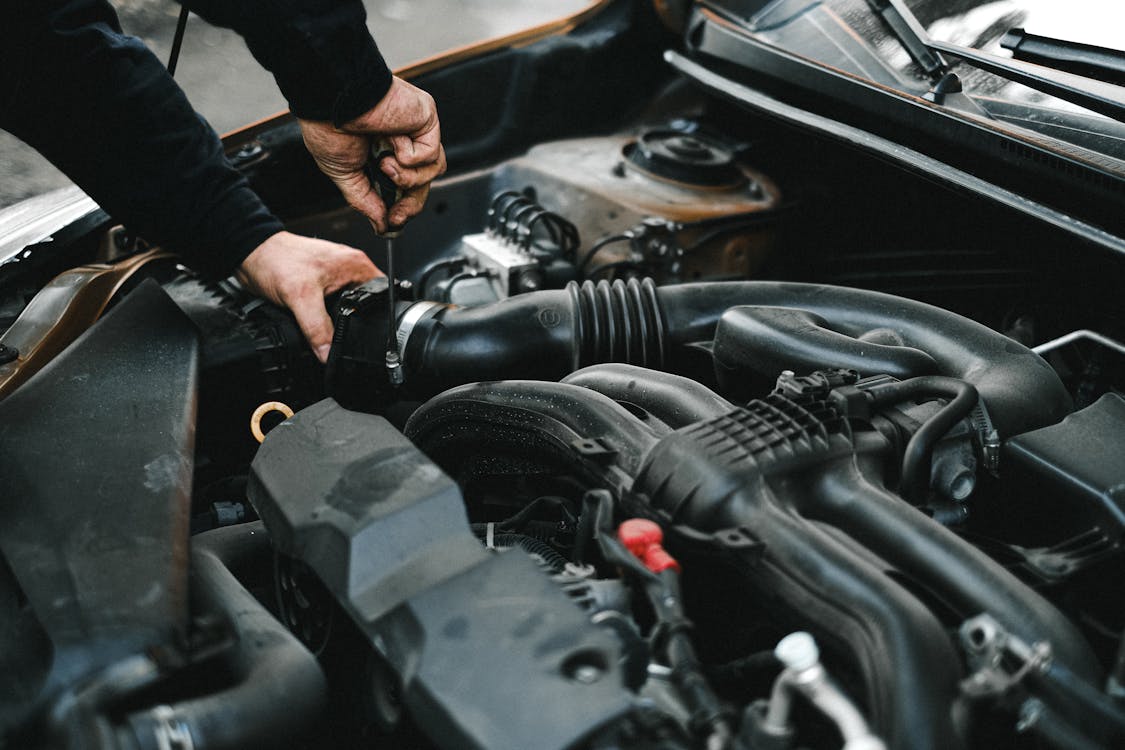
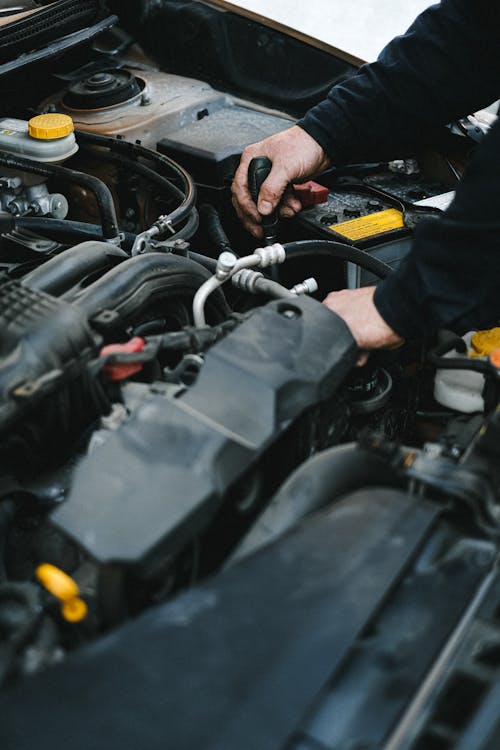
Oklahoma heat destroys car batteries faster than almost anywhere in the country. If yours is slow to crank, clicking but not starting, or three-plus years old, it's living on borrowed time. We bring a brand-name replacement directly to your location — tested, installed, and warrantied.
Most people think cold weather kills car batteries. It doesn't — it just exposes the damage that heat already caused. Oklahoma City averages 60+ days per year above 90°F, and regularly breaks 100°F from June through September. Under your hood, temperatures climb even higher — sometimes past 200°F near the exhaust manifold. That relentless heat attacks your battery's internal chemistry in ways you can't see until the morning it refuses to crank.
Heat accelerates a chemical process called sulfation, where lead sulfate crystals build up on the battery plates and permanently reduce capacity. It also evaporates the electrolyte fluid inside the battery, exposing the plates to air and causing irreversible damage. A battery that might last five years in Portland or Seattle will typically last three to four years in Oklahoma City. By the time you notice slow cranking or dim headlights, the damage has been building for months.
At OKC Mobile Mechanic, car battery replacement is one of our most common calls — especially in late fall when the first cold snap reveals batteries that Oklahoma's summer quietly destroyed. Our ASE certified technicians bring the battery to you, test the entire charging system, and install a brand-name replacement that's built to handle Oklahoma's extreme climate. No tow truck. No waiting room. No second trip to the parts store.
The battery that got you through last Oklahoma summer may not survive the first cold morning in October. Heat does the damage — cold reveals it. If your battery is three years old or older, get it tested before the seasons change.
— OKC Mobile Mechanic, replacing batteries across OKC since 2011
Don't wait until you're stranded. These symptoms tell you your battery is failing — catch them early and replace on your schedule, not in an emergency.
You turn the key and the engine groans: a slow, strained "rrrr...rrrr...rrrr" instead of a sharp, confident snap. That labored cranking means the battery can't deliver enough current to spin the starter motor at full speed. It gets worse on cold mornings and hot afternoons — both extremes Oklahoma delivers in abundance. This is your earliest warning. Don't ignore it.
You hear a machine-gun rattle of clicks when you turn the key, but the engine doesn't even try to turn over. This means the battery has just enough voltage to engage the starter solenoid but nowhere near enough to actually spin the motor. This is different from a single loud click, which usually points to a bad starter motor. Rapid clicking is a dead or nearly dead battery almost every time.
That little battery icon on your dashboard is actually a charging system warning. It lights up when voltage drops below the healthy range of 13.5-14.5 volts while the engine is running. It could mean the battery itself is failing, the alternator isn't charging properly, or a cable connection has corroded. Any of those scenarios needs attention before you end up on the side of I-35 or I-44.
Pop your hood and look at the battery. Is the case flat on all sides, or does it look bloated — bulging outward like it's been inflated? Oklahoma's extreme heat causes the electrolyte inside to boil and produce gas, which swells the case. A swollen battery is a ticking clock. It can leak acid onto your engine bay components or even rupture. Don't jump start it — replace it.
Park with the engine idling and the headlights on. If they look noticeably dim at idle but brighten when you press the gas pedal, your battery isn't holding charge. At idle, the alternator produces minimal output and the battery has to pick up the slack. A healthy battery handles this easily. A failing one can't, and the voltage drops enough that your lights visibly dim.
White, green, or blue powdery buildup on the battery terminals is acid leaking through failing seals. This corrosion creates electrical resistance between the battery and the cables, which reduces cranking power and can mimic a dead battery. Our technicians clean terminals on every battery replacement, but heavy corrosion on a battery over three years old usually means the battery itself is failing from the inside out.
The national average battery lifespan is 4-5 years. In Oklahoma, expect 3-4 years — sometimes less for vehicles parked outside without a garage. The primary reason is heat exposure. Every summer day above 95°F accelerates the internal degradation process. Here's what affects your specific battery's lifespan in the OKC metro:
A jump start gets you running once. A replacement solves the problem. Here's how to know which one you actually need.
Your battery is under three years old, this is the first time it's died, and there's a clear cause — you left the headlights on overnight, a door was ajar, or you haven't driven the vehicle in two weeks. In these cases, a jump start plus a charging system test can confirm the battery is still healthy and was simply drained by an identifiable cause. We can test your battery as part of any mobile mechanic visit.
Your battery is three years old or older in Oklahoma. You've needed jump starts more than once in the past few months. The engine cranks slowly or clicks without starting. The battery case is swollen or terminals are heavily corroded. You're seeing the battery warning light on your dashboard. In any of these scenarios, a jump start is a band-aid — the battery is failing and will leave you stranded again, probably at the worst possible time.
Sometimes a dead battery is a symptom, not the disease. A failing alternator won't recharge the battery while driving, so even a brand-new battery will die. A parasitic electrical draw — a stuck relay, a faulty module, or an aftermarket accessory — can drain the battery overnight. A corroded cable creates resistance that mimics a dead battery. Our mobile diagnostics team tests all of these before recommending parts.
We don't just show up and swap batteries. Our ASE certified technicians perform a full charging system evaluation: battery load test, alternator output check, cable and ground inspection, and parasitic draw screen if warranted. If your battery tests good and the alternator is the culprit, we'll tell you — even though it means we sell one fewer battery that day. That's how we've built a five-star reputation and a review record we're proud of.
The most common type in passenger cars and trucks. Uses liquid sulfuric acid electrolyte. Affordable and widely available. Good options for most vehicles that don't have excessive electrical demands. In Oklahoma, look for high CCA (cold cranking amps) ratings — at least 600 CCA for sedans and 700+ CCA for trucks and SUVs. We carry quality flooded batteries from trusted manufacturers with multi-year warranties.
Premium batteries that use fiberglass mats to absorb the electrolyte instead of having it in liquid form. AGM batteries are more vibration-resistant, last longer in extreme heat, handle deep-discharge cycles better, and deliver higher cranking power. Most European vehicles — BMW, Mercedes, Audi, Volkswagen — require AGM batteries from the factory. They cost more ($200-$350 installed) but the performance and longevity difference in Oklahoma's climate makes them a smart investment, especially for vehicles with start-stop technology or high electrical loads.
The difference comes down to plate thickness, alloy composition, and manufacturing quality. Cheap batteries use thinner lead plates that degrade faster in heat. Quality batteries use thicker plates with calcium or silver-calcium alloys that resist sulfation and corrosion. The visible difference? A cheap battery might weigh 30 pounds; a quality one of the same size might weigh 38 pounds — that extra weight is thicker, denser plates that last longer. We install quality batteries because in Oklahoma's climate, the $30-$60 cost difference buys you 1-2 extra years of reliable service.
Every vehicle requires a specific battery group size — the physical dimensions, terminal location, and capacity rating that matches the vehicle's battery tray and electrical system. The most common group sizes we replace in the Oklahoma City metro are: Group 24/24F (Honda Civic, Toyota Camry, Nissan Altima), Group 35 (Honda Accord, Subaru, Mazda), Group 48/H6 (Chevy Equinox, Ford Escape, many European vehicles), Group 65 (Ford F-150, Chevy Silverado, RAM 1500), and Group 34/78 (GM trucks and SUVs). We stock the most common sizes and can source specialty batteries with advance notice. Call 405-351-7252 with your vehicle year, make, and model for an instant quote.
Stranded with a dead battery? We come to you — wherever you are in the greater Oklahoma City area. Home, office, parking lot, apartment complex, or roadside.
Dead battery somewhere in the OKC metro? Call 405-351-7252 and tell us where you are. We'll be there.
Battery problems often involve other components. Our ASE certified team diagnoses and repairs the full electrical and starting system at your location.
A bad alternator kills batteries. If yours isn't charging properly, replacing the battery alone won't fix the problem. We test alternator output with every battery service and replace them on-site when needed.
Learn More →If you hear a single loud click when you turn the key — not rapid clicking — the problem may be the starter, not the battery. We diagnose the difference on-site and replace starters at your location.
Learn More →Parasitic draw, voltage drops, corroded grounds, faulty modules — electrical gremlins can drain a healthy battery overnight. Our diagnostic service traces the problem to its source so the fix actually lasts.
Learn More →While we're at your location for a battery replacement, it's a great time to catch up on routine car service — oil change, fluid check, belt and hose inspection. Our technicians spot problems early so you're not calling us for an emergency next month.
Learn More →A dead battery means your car isn't going anywhere. Calling a tow truck adds $150-$300 to your bill before the shop even looks at it, plus you need a ride back to pick up the car when it's done. Our on-site auto repair approach eliminates all of that. We bring the battery and the expertise directly to wherever your vehicle is sitting — your driveway in Moore, your office parking lot in Edmond, the Walmart on NW Expressway, or the side of I-240. Your car never has to move.
We don't just sell batteries. We test the entire electrical chain — battery load test, alternator output under load, voltage regulator, cable resistance, and ground connections — before recommending anything. A shop that skips this step might charge you for a battery when the real problem is a $30 corroded cable or a failing alternator. We've built our reputation on honest diagnosis, and our five-star reviews reflect that.
Our car battery replacement prices are competitive with — and often beat — the auto parts stores and big-box shops in the OKC metro, and we include installation, testing, terminal cleaning, and old battery recycling in the price. No trip charge. No diagnostic fee. No surprise line items on the invoice. We quote a number over the phone and that's what you pay. Compare that to the cheapest mobile mechanic options out there — we match on price and exceed on service quality.
Dead batteries don't check the calendar. We operate 7am to 7pm, seven days a week, including weekends and holidays. Saturday morning dead battery before your kid's soccer game? Sunday afternoon no-start in the church parking lot? We're available. Same-day service is usually possible — call 405-351-7252 and we'll give you an arrival time.
In Oklahoma, car batteries typically last 3 to 4 years — shorter than the national average of 4 to 5 years. Oklahoma's extreme summer heat accelerates internal chemical degradation and evaporates electrolyte fluid faster than moderate climates. Winter cold then delivers the final blow by demanding more cranking power from an already weakened battery. If your battery is over 3 years old and you're in the OKC metro, get it tested before summer or winter hits.
The most common signs include: slow or labored engine cranking, rapid clicking when you turn the key, dim headlights at idle that brighten when you rev the engine, the dashboard battery warning light illuminating, a swollen or bloated battery case (common in Oklahoma heat), needing frequent jump starts, and electrical accessories like power windows operating slowly. If you notice any of these, call 405-351-7252 for a battery test before you get stranded.
A jump start is a temporary fix. If your battery is under 3 years old and this is the first time it's died, a jump start plus a charging system test can determine if it was a one-time drain (like leaving lights on) or a deeper issue. If the battery is over 3 years old, has required multiple jump starts, or shows physical signs of wear like terminal corrosion or a swollen case, replacement is the right call. We test before we sell — if your battery is still good, we'll tell you.
Yes, significantly. Heat is actually harder on batteries than cold. When temperatures exceed 100 degrees — which happens regularly in Oklahoma from June through September — the heat accelerates internal corrosion, plate degradation, and electrolyte evaporation. A battery that would last 5 years in a mild climate like San Francisco may only last 3 years in Oklahoma City. The damage happens silently all summer, then the first cold morning reveals a battery that can no longer deliver enough cranking power.
The main differences are cold cranking amps (CCA), reserve capacity, warranty length, and plate construction. A cheap battery might have thin plates, lower CCA ratings, and a 12-month warranty. A quality battery uses thicker lead plates, higher CCA for reliable cold-weather starts, better heat resistance for Oklahoma summers, and comes with a 3 to 5 year warranty. We install brand-name batteries because the cost difference is usually $30 to $60 — but the lifespan difference can be 1 to 2 years.
Car battery replacement with OKC Mobile Mechanic typically runs $150 to $230 for a standard lead-acid battery or $200 to $350 for an AGM battery. That price includes the battery, delivery to your location, installation, terminal cleaning, charging system test, and old battery recycling. There's no trip charge and no hidden fees. Call 405-351-7252 for a quote specific to your vehicle.
Absolutely. If the alternator isn't charging properly, a brand-new battery will drain and die within days or weeks. That's why we test the alternator and entire charging system before every battery replacement. If the alternator is the real problem, we'll tell you — and we can replace it on-site too. Replacing a battery without testing the alternator is like filling a leaky tire without patching the hole.
Yes. Trucks and SUVs are some of our most common battery replacement calls in the OKC metro. Ford F-150s, Chevy Silverados, RAM 1500s, Toyota Tundras, Chevy Tahoes, Ford Explorers — we stock the heavy-duty Group 65, 34, and 48 batteries these vehicles require. Trucks need higher CCA ratings than sedans, and we carry batteries sized and rated specifically for full-size truck and SUV applications. Contact us with your vehicle details for a fast quote.
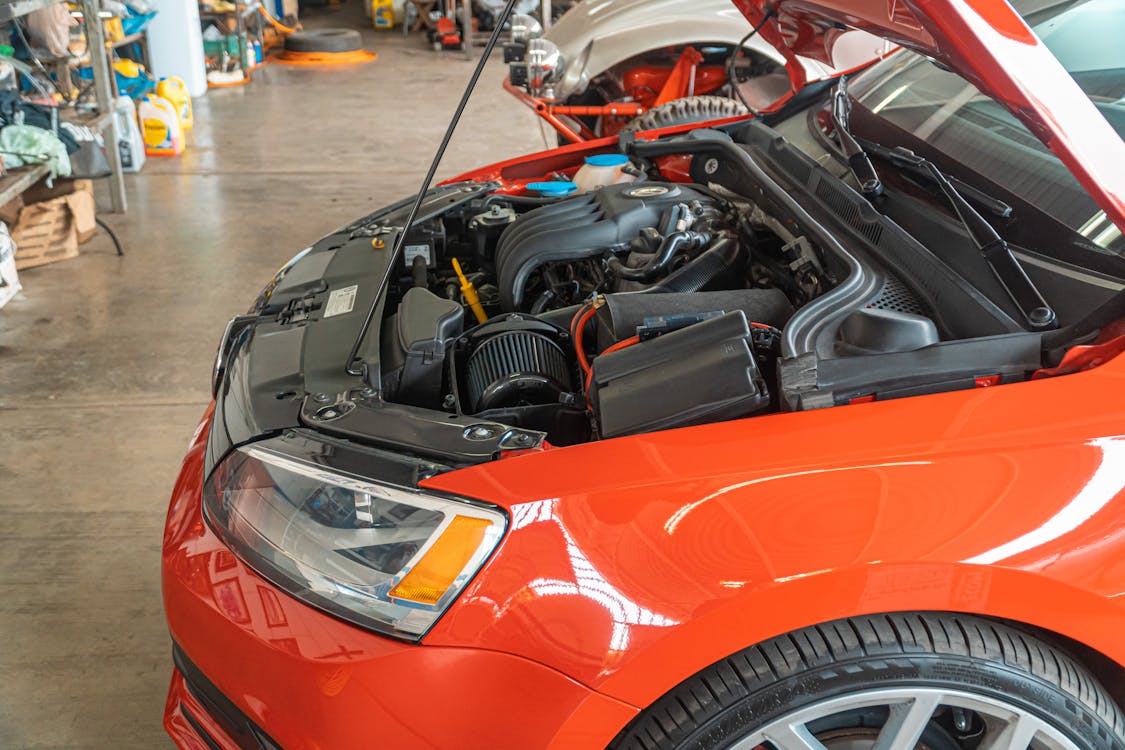
Our ASE certified mobile mechanics bring the battery to you — installed, tested, and warrantied. Same-day service, 7 days a week. Call 405-351-7252 for a free quote.
Call 405-351-7252