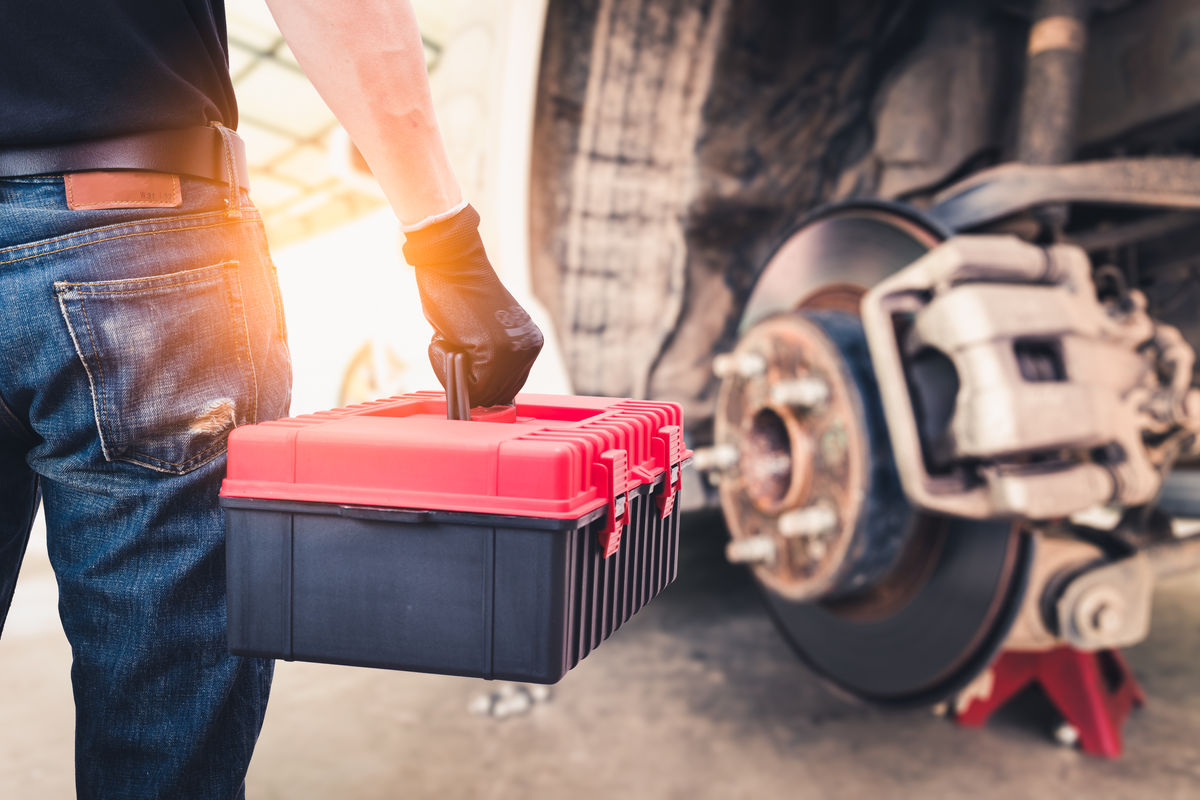
When the master cylinder fails, your brake pedal sinks and your stopping power disappears. OKC Mobile Mechanic replaces the master cylinder, bench bleeds it properly, flushes the entire brake system with fresh fluid, and gets your brakes firm again — all at your location.
The master cylinder is the heart of your brake hydraulic system. When you press the brake pedal, the master cylinder converts that force into hydraulic pressure that pushes brake fluid through the lines to your calipers and wheel cylinders. When the internal seals wear out, fluid bypasses inside the cylinder instead of building pressure — and your pedal sinks toward the floor. This is not a "drive it until payday" situation. A failing master cylinder means your brakes can fail without warning. OKC Mobile Mechanic comes to your location, replaces the master cylinder with a properly bench-bled unit, bleeds the entire system of old fluid and air, and verifies firm pedal feel before we leave.
These are brake safety symptoms. Any one of them warrants immediate inspection.
The pedal slowly sinks to the floor while you hold it at a stop light. This is the master cylinder's internal seals bypassing fluid.
The brake pedal feels mushy and requires more pressure than usual. You may need to pump it to get firm brakes.
The dashboard brake light illuminates because the fluid level has dropped in the master cylinder reservoir due to internal leaking or external seepage.
Brake fluid leaking from the rear of the master cylinder onto the firewall or brake booster is a sign the rear seal has failed.
Dark brown or black brake fluid in the reservoir means moisture contamination. This corrodes the master cylinder bore and accelerates seal failure.
If the car pulls to one side during braking, one circuit of the master cylinder may have failed while the other still works — a partial failure.
Master cylinder replacement takes 2-3 hours including bench bleed and full system bleed.
Describe the pedal feel. Do NOT drive if the pedal goes to the floor.
Fluid level, line inspection, caliper check, and pedal feel diagnosis.
New master cylinder bench bled, installed, and lines bled at all four corners.
Firm pedal verified at rest and under braking. No soft spots, no sinking.
Master cylinder replacement done right includes a complete brake hydraulic system service.
A car with a failing master cylinder should not be driven. Mobile service is the only safe option.
A sinking pedal means your brakes can fail at any moment. Let us come to you.
We bench bleed every master cylinder before installation. Skipping this step leaves air trapped and a soft pedal.
We bleed all four wheels in the correct sequence to remove every bit of air from the brake lines.
Old moisture-laden fluid caused the failure. We replace all of it with clean DOT-spec fluid.
A car with no brakes needs a flatbed tow. Our mobile service saves that $100+ expense.
While we're in the brake system, we inspect lines, hoses, calipers, and wheel cylinders for other issues.
Everything you need to know about master cylinder failure and replacement.
Brake master cylinder replacement typically runs $300-$700 installed, including the new cylinder, fresh brake fluid, and a full four-corner system bleed. Vehicles with ABS or integrated brake boosters may cost more. Call 405-351-7252 for a free quote.
The master cylinder's internal seals have failed, allowing fluid to bypass inside instead of building pressure. It can also be caused by a brake fluid leak at a caliper, wheel cylinder, or line — but a sinking pedal that firms up when you pump it is almost always the master cylinder.
Absolutely not. A failing master cylinder means your brakes can fail completely without warning. If the pedal goes to the floor even once, do not drive the vehicle. Call us and we'll come to your location.
Old brake fluid that has absorbed moisture corrodes the cylinder bore and degrades the internal rubber seals. Most master cylinders last 80,000-150,000 miles, but neglected brake fluid can cut that life in half. Oklahoma's hot summers accelerate fluid degradation.
Yes, every time. Bench bleeding pushes air out of the master cylinder before we install it on the car. This is a critical step that many shops rush past. It makes the final system bleed faster and ensures a firm, reliable pedal.
Most master cylinder replacements take 2-3 hours. That includes bench bleeding the new unit, installation, bleeding all four corners, and verifying pedal firmness. Vehicles with difficult access may take longer. We'll estimate before starting.
We replace brake master cylinders throughout the Oklahoma City metro. Your brakes are too important to gamble with — call us before you try to drive it.
This is a safety emergency. Don't drive it. Call now and we'll replace your master cylinder at your location today.
Call 405-351-7252